
12 meaningful things to do with ashes after cremation
After a cremation, many families are left with a question that can feel both practical and deeply emotional: what should we do with the ashes? Some people know immediately. Others need time, conversation and space before a decision feels right.
This article brings together gentle, meaningful options for families in the UK and Ireland. It is intended as inspiration, not as a legal guide. Where practical rules may apply, we link to more detailed advice about keeping ashes at home, scattering ashes, dividing ashes, urn size, placing an urn, travelling with ashes, keepsakes and ashes jewellery.
Quickly explained: You do not have to decide immediately what to do with ashes after cremation. Many families first keep the ashes safely while they consider the options. Common choices include keeping an urn at home, placing ashes in a cemetery or columbarium, scattering ashes, dividing ashes, choosing keepsake urns, wearing ashes jewellery or travelling with ashes for a ceremony elsewhere.
If you need a practical starting point rather than inspiration, begin with our information and advice on cremation urns for ashes.
Before you choose: take time and check the practical rules
Some choices are mostly personal, such as keeping an urn at home or choosing a keepsake. Other choices may involve permission, documentation or local rules, for example scattering ashes on land you do not own, placing an urn in a columbarium, travelling with ashes or taking ashes abroad.
In the UK, official environmental guidance says you do not need permission to scatter ashes from a single cremation on your own land, but you should seek permission from the landowner if scattering on someone else’s land. If scattering ashes across surface water, the effect on the environment and wildlife should be minimal and harmful wreaths or memorabilia should not be placed in the water.
In Ireland, practical arrangements can differ by location, crematorium, cemetery, local authority, landowner or transport provider. If ashes are brought back to Ireland after a cremation abroad, check local laws, carrier requirements and the documents needed, such as a death certificate and cremation certificate.
Gentle advice: If several relatives are involved, it can help to talk about the options before making a final decision. Some families choose one shared memorial place. Others divide the ashes so each person can remember in a way that feels personal and respectful.
12 meaningful things to do with ashes after cremation
1. Keep the ashes at home in a cremation urn
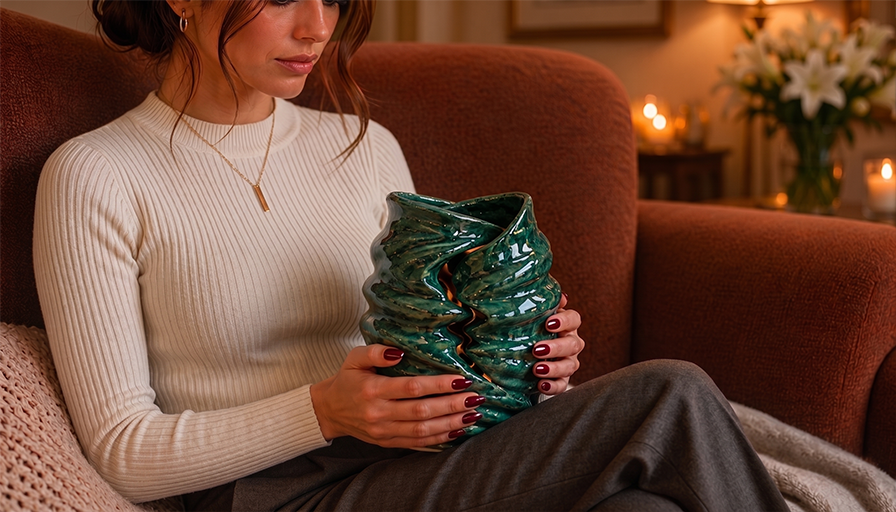
Keeping ashes at home can offer comfort and a sense of closeness. A cremation urn may be placed on a mantelpiece, sideboard, remembrance table, shelf, cabinet or another quiet place in the home.
Choose an urn that suits the room and the feeling you want it to express. Also consider stability, material, light, moisture, children, pets and whether the urn should be discreet or more visible.
Read more: keeping cremation ashes at home.
2. Choose one main urn for all ashes
Some families prefer to keep all ashes together in one full-size urn. This can be suitable when the family wants one central memorial, either at home or in a fixed memorial place.
Before choosing a main urn, check the amount of ashes and the urn capacity. For an adult, the amount of ashes is often around 3 to 3.5 litres, but this can vary.
Read more: how much ash is left after cremation.
3. Divide the ashes among family members
Dividing ashes can help when relatives have different wishes. One person may want to keep ashes at home, another may prefer ashes jewellery, while another may want to scatter a portion in a meaningful place.
This can be a thoughtful solution, but it is best discussed openly. Decide who will receive a portion, how much is needed and whether a funeral director, crematorium or another experienced person should help.
Read more: dividing ashes after cremation.
4. Keep a small portion in a keepsake urn
A keepsake urn holds a smaller amount of ashes than a full-size urn. It can be meaningful when several relatives each want a small remembrance, or when most ashes will be scattered or placed elsewhere.
Keepsake urns are available in different styles and materials. Some are discreet, while others are decorative or symbolic. A mini keepsake can also be an alternative ash destination when you only want to keep a small portion.
View: keepsake urns for ashes. You may also find our article about a mini keepsake urn as an alternative ash destination helpful.
5. Wear ashes jewellery
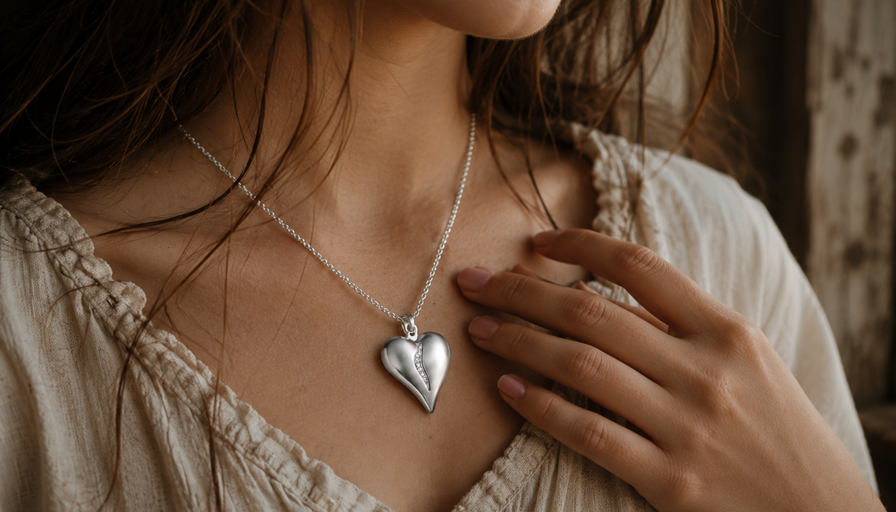
Ashes jewellery holds a very small symbolic amount of ashes, usually much less than a keepsake urn. It can be a discreet way to keep someone close, especially when you want a remembrance that can be worn daily or on meaningful occasions.
Ashes can be placed in pendants, bracelets, rings, charms or other memorial jewellery. Some families choose matching items for several relatives. Others prefer a jewellery piece with hair, a fingerprint, a name or another personal detail instead of ashes.
View: ashes jewellery.
6. Scatter ashes in a meaningful place
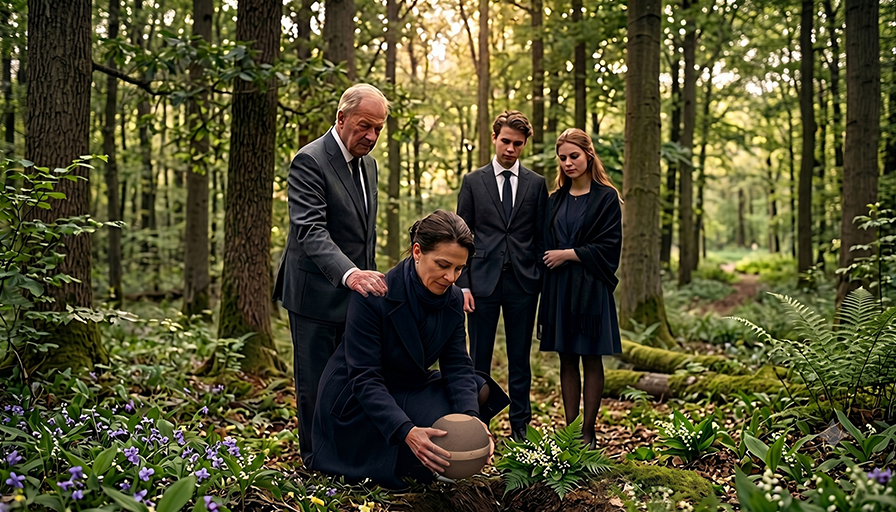
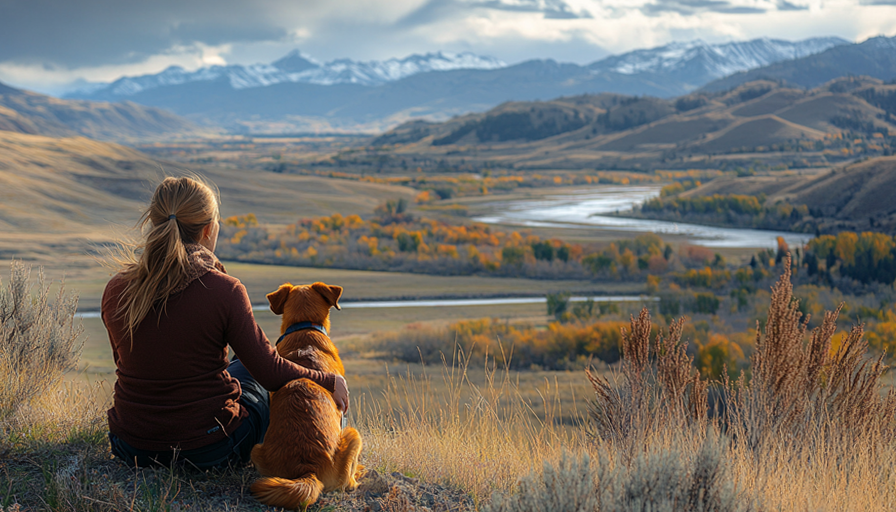
Scattering ashes can feel like a final act of release. Families may choose a garden, woodland, beach, river, mountain, family land or another place connected to the person who has died.
Always check permission and local guidance. In the UK, landowner permission is important if the land is not yours. For water scattering, environmental care matters. In Ireland, local arrangements and the nature of the place should also be checked.
Read more: scattering ashes. For a more personal ceremony, see our article with scattering ashes ceremony ideas.
7. Scatter ashes at sea or near water
For some families, water has a strong emotional meaning. Scattering ashes at sea, by a river or near a lake can symbolise movement, peace or a connection with nature.
Use a respectful method and avoid anything that may harm wildlife or the environment. If you are considering a water ceremony, check local rules, safety, weather, access and whether any permissions are needed.
View: ash scattering options.
8. Place the urn in a columbarium or urn wall
A columbarium or urn wall gives ashes a fixed memorial place. This can be helpful when family members want somewhere to visit, but do not want or cannot choose a traditional grave.
Before choosing an urn, ask for the internal dimensions of the niche and any rules about materials, nameplates, photographs or small memorial items.
Read more: placing an urn in a columbarium.
9. Bury the ashes in a cemetery, churchyard or memorial garden
Ashes may be buried in an urn grave, family grave, cemetery, churchyard, crematorium garden or memorial park, depending on local rules and availability.
This option creates a permanent place of remembrance. Always check the rules for the location, including urn size, material, grave rights, memorial stones, inscriptions and future access.
Read more: where to place a cremation urn and our article about urns and ashes in cemeteries.
10. Create a garden memorial
A garden memorial can feel very personal, especially if the person loved nature, flowers or being outdoors. Some families place an outdoor urn in the garden, while others create a quiet remembrance corner with plants, a bench, lantern or small plaque.
Not every urn is suitable for outdoor use. Rain, frost, sunlight and moisture can affect some materials, so choose carefully and check whether local rules apply if ashes are buried or scattered.
Read more: keeping an urn in your garden and our guide to urn materials for cremated ashes.
11. Travel with ashes for a ceremony elsewhere
Sometimes a person wished to be remembered in another country, near family abroad or in a place that was especially meaningful. Travelling with ashes is possible in many cases, but it requires careful preparation.
Airlines, airports and destination countries may ask for documents such as a death certificate and cremation certificate. A non-metallic, X-rayable container is often recommended for air travel.
Read more: taking ashes on a plane.
12. Keep a pet’s ashes in a personal memorial
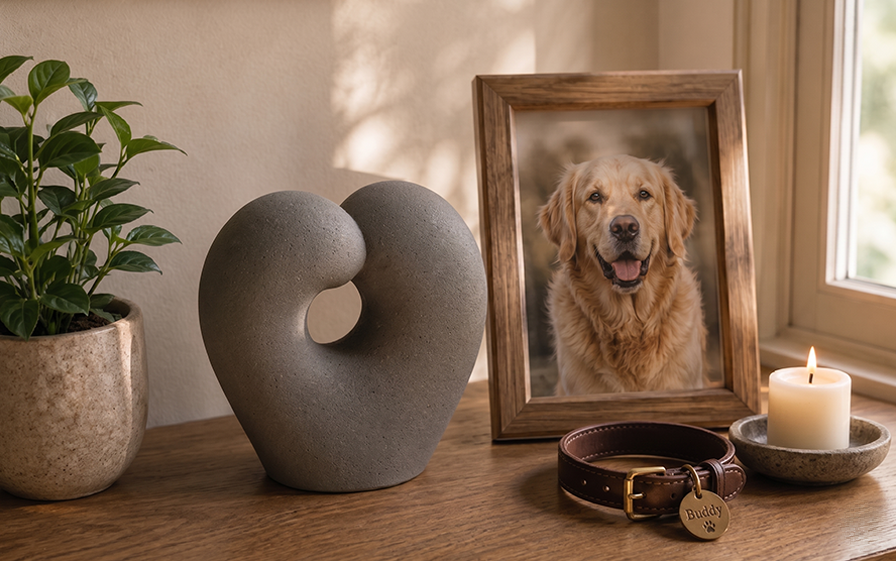
The loss of a pet can be deeply felt. Many families choose a pet urn, keepsake, garden memorial, small scattering ceremony or piece of pet ashes jewellery.
As with human ashes, the right choice depends on the bond you had, where the ashes will be kept and whether you want one shared memorial or smaller personal keepsakes.
View: pet urns. You may also find our articles on what to do with your dog’s ashes and ways to memorialize your pet’s ashes helpful.
Which option fits your family?
If several options feel possible, the following overview may help you narrow the choice. It is not a rule, only a gentle way to think about what each choice can offer.
| If you want... | Consider... |
|---|---|
| A private place of remembrance close to you | A home urn, keepsake urn or ashes jewellery |
| A fixed place family can visit | A cemetery, churchyard, columbarium, urn wall or urn monument |
| To honour a wish connected to nature | Scattering ashes, a garden memorial or a biodegradable urn where permitted |
| Several relatives to have a remembrance | Dividing ashes, keepsake urns or ashes jewellery |
| More time before deciding | Keeping ashes safely in a temporary container or simple urn while you reflect |
| A ceremony abroad or in another part of the country | Checking travel documents, airline rules and destination requirements before travelling with ashes |
What if you are not ready to decide?
You do not have to choose immediately. Many families keep ashes safely for weeks, months or even years before deciding what feels right. Grief does not follow a fixed schedule, and the decision about ashes can change as time passes.
It can help to begin with practical questions. Do you want the ashes close to you? Do several relatives want a remembrance? Was there a place your loved one cared about? Would a fixed memorial place bring comfort? Would a discreet keepsake feel more suitable?
If there is disagreement within the family, consider pausing before making an irreversible decision such as scattering all ashes. Dividing ashes, keeping a small reserve portion or choosing a temporary urn can create space for later choices. If you may need to access the ashes later, also read our guide about opening an urn later.
Please note: Rules and practical requirements can differ between the UK, Ireland, local authorities, cemeteries, crematoria, churchyards, columbarium providers, airlines, postal services, landowners and destination countries. Always check the relevant rules before scattering, burying, placing, travelling with or sending cremation ashes.
Further guidance
This article is intended as inspiration. If you need practical advice about urn size, placement, filling, scattering, dividing ashes or travelling with ashes, the following guides may help.
A personal choice, made with care
What you do with ashes after cremation should not be decided by pressure, comparison or what other people expect. Some families choose a beautiful urn at home. Others prefer a quiet scattering ceremony, ashes jewellery, keepsakes, a columbarium or a fixed memorial place. Some combine several choices.
Whatever you choose, the most important thing is that the decision feels respectful, practical and true to the person or pet being remembered. Taking time is allowed. Asking questions is allowed. Changing your mind before a final decision is also allowed.
Looking for a suitable urn, keepsake or memorial item?
View our urns for ashes, keepsake urns, ashes jewellery and pet urns, or start with our advice hub if you are not yet sure what you need.