
Finding words that feel sincere after a loss
Finding the right words after someone has died can feel difficult. “Rest in peace” is a familiar and widely recognized phrase, but it may not always feel personal enough for a sympathy card, obituary, memorial post, engraving or private message of remembrance.
This guide offers 30 meaningful alternatives to “rest in peace”, with gentle explanations of when each phrase may be appropriate. Some are spiritual, some are poetic, some are simple and personal. The best choice is the one that feels sincere, respectful and suited to the person being remembered.
Choose words with care. If you are writing for someone else’s family, be mindful of their beliefs, culture and relationship with the person who died. Religious or spiritual phrases can be comforting when they fit, but they may feel less appropriate if you do not know the family’s wishes.
How to choose the right alternative to rest in peace
The right phrase depends on where you will use it and how close you were to the person who died. A short phrase for a sympathy text may feel different from wording for an obituary, memorial service, urn engraving or public tribute.
For sympathy cards
Choose warm, simple phrases such as “Forever in our hearts”, “You will be deeply missed” or “May you be at peace”.
For obituaries
Use timeless and respectful wording such as “In loving memory”, “Gone but never forgotten” or “Your memory will live on”.
For engravings
Short phrases work best, especially for memorial jewelry, keepsakes, urn plaques or small memorial items.
For social posts
Choose something sincere and avoid sharing private details unless the family has already made the news public.
Quick examples: In loving memory, Forever in our hearts, Gone but never forgotten, May you be at peace, Until we meet again, Always loved, Your memory will live on.
30 ways to say rest in peace
Use these phrases as inspiration. You can copy them as they are, or adapt them with the person’s name, a date, a short memory or a personal message.
1. In loving memory
Best for: memorials, obituaries, engravings and tribute pages
“In loving memory” is simple, timeless and widely understood. It expresses that the person will continue to be remembered with love.
2. Gone but never forgotten
Best for: cards, social posts and memorial pages
This phrase emphasizes that although someone has died, their memory and influence remain present in the lives of those who loved them.
3. Rest easy
Best for: informal messages and personal tributes
“Rest easy” is a gentle and modern alternative to “rest in peace”. It can feel warmer and less formal.
4. May you find eternal peace
Best for: spiritual cards, obituaries and memorial services
This phrase expresses the hope that the person has found lasting peace beyond the pain or burdens of life.
5. Forever in our hearts
Best for: close family, memorial jewelry, urn engravings and keepsakes
A deeply personal phrase that expresses ongoing love. It is often chosen when someone wants a short message that feels intimate and lasting.
6. Sleep in heavenly peace
Best for: religious or spiritual remembrance
This phrase has a soft, spiritual tone and is often used when the family’s beliefs include the idea of heavenly rest.
7. Rest with the angels
Best for: spiritual memorial messages
“Rest with the angels” offers a comforting image of protection, peace and divine presence. Use it when this type of imagery matches the family’s beliefs.
8. May your soul rest in peace
Best for: religious or traditional condolences
This is a slightly more personal version of the classic phrase, often used in spiritual or faith-based contexts.
9. Rest in power
Best for: activists, public figures and people with a strong legacy
“Rest in power” is often used to honor someone whose life, voice or work had a meaningful impact. It can be powerful, but it may not suit every situation.
10. Gone too soon
Best for: sudden loss or a life that ended too early
This phrase expresses the sadness of a life that felt unfinished. It should be used carefully, especially when the circumstances are very sensitive.
11. Your memory will live on
Best for: obituaries, speeches and public tributes
This phrase focuses on legacy. It reminds others that a person’s influence, kindness, stories and values can continue through those who remember them.
12. May you rest among the stars
Best for: poetic memorial messages
A gentle and imaginative phrase for someone who loved nature, the night sky or poetic language.
13. At peace now
Best for: after illness or suffering
This phrase can bring comfort when someone has suffered, but use it with care. Not every family wants the loss framed mainly around relief.
14. You will be deeply missed
Best for: sympathy cards and personal messages
Direct, honest and heartfelt. It acknowledges the space the person leaves behind.
15. Gone but not forgotten
Best for: traditional condolences and memorial posts
A familiar phrase that expresses lasting remembrance. It is slightly shorter and more understated than “gone but never forgotten”.
16. May you find rest
Best for: simple, gentle condolences
This phrase is quiet and sincere. It works well when you want to avoid overly religious or dramatic wording.
17. Safe journey
Best for: spiritual, cultural or poetic remembrance
“Safe journey” frames death as a passage. It can be meaningful in cultures or families that use journey-based language around death.
18. May your spirit be free
Best for: spiritual or nature-inspired tributes
This phrase suggests release, peace and freedom. It can be especially fitting for someone remembered as free-spirited or deeply connected to nature.
19. Always loved
Best for: engravings, keepsakes, memorial jewelry and close family remembrance
“Always loved” is short, intimate and lasting. It is especially suitable when space is limited, such as on a small plaque, keepsake, urn inscription or piece of memorial jewelry.
20. With deepest sympathy
Best for: formal sympathy cards and professional condolences
This phrase is more about supporting the bereaved than speaking directly to the departed. It is respectful, formal and widely appropriate.
21. In God’s care
Best for: religious families and faith-based messages
A comforting phrase when the family believes the person is now held by God. Avoid it if you do not know the family’s beliefs.
22. Rest in eternal light
Best for: spiritual or poetic memorial wording
This phrase offers a peaceful image of light, presence and continued spiritual beauty.
23. Fly high
Best for: informal tributes and younger audiences
“Fly high” suggests freedom and release. It is commonly used in social posts, but may feel too informal for an obituary or engraving.
24. Until we meet again
Best for: spiritual messages and close relationships
This phrase expresses hope for reunion. It can be deeply comforting when it matches the beliefs of the person writing or the family receiving the message.
25. You will always be remembered
Best for: memorial speeches, obituaries and tribute posts
A respectful phrase that focuses on remembrance rather than farewell.
26. May you be at peace
Best for: sympathy cards, memorial posts and personal notes
This is one of the most versatile alternatives. It is warm, simple and suitable for many beliefs and relationships.
27. Rest in quiet peace
Best for: calm, poetic memorial wording
A softer and more natural alternative to “rest in tranquility”, suggesting stillness, calm and a gentle sense of peace.
28. In peaceful rest
Best for: traditional memorial wording
This phrase works well when you want something formal and quiet, especially for printed materials or memorial pages.
29. Rest among the angels
Best for: religious or spiritual remembrance
A poetic variation of “rest with the angels”. It offers a gentle image of the person being surrounded by peace and care.
30. May the winds carry you home
Best for: poetic, nature-inspired and personal tributes
This phrase frames death as a peaceful journey home. It can feel especially meaningful for someone who loved nature, travel, water, sky or open spaces.
Which phrase should you use?
When choosing an alternative to “rest in peace”, think about the situation, the family’s beliefs and the place where the words will appear. A phrase for a social media post may not be the right phrase for an obituary. A phrase for an urn engraving may need to be shorter than a message in a sympathy card.
Short and universal
“In loving memory”, “Forever in our hearts” and “May you be at peace” are safe choices for many situations.
Spiritual or religious
“In God’s care”, “Rest with the angels” and “Sleep in heavenly peace” are meaningful when they match the family’s beliefs.
Poetic and personal
“May you rest among the stars” or “May the winds carry you home” can feel beautiful for a more personal tribute.
Legacy-focused
“Your memory will live on” and “You will always be remembered” focus on the life, impact and love that remain.
Short phrases for urn engravings and memorial jewelry
If you are choosing words for an urn, keepsake, memorial plaque or piece of memorial jewelry, short wording is usually best. Small surfaces often have limited space, and a simple phrase can feel more elegant and timeless than a long sentence.
- In loving memory
- Forever in our hearts
- Always loved
- Never forgotten
- Until we meet again
- May you be at peace
- Gone but never forgotten
- Your memory will live on
Practical tip: for engravings, check the available space before choosing your wording. Names, dates and a short phrase often work better than a long message, especially on small keepsakes or memorial jewelry.
What to avoid when replacing “rest in peace”
Most phrases are meant with kindness, but some wording can feel too casual, too religious, too dramatic or too public depending on the situation.
- Avoid religious phrases if you do not know the family’s beliefs.
- Avoid humor unless you know it would be welcomed.
- Avoid language that explains the death, such as “everything happens for a reason”.
- Avoid public posts before the family has shared the news.
- Avoid phrases that make assumptions about suffering, illness or the afterlife.
- Avoid very long wording for engravings, small plaques or memorial jewelry.
Simple is often best: if you feel unsure, choose a short, respectful phrase and add the person’s name. For example: “In loving memory of [name]” or “[name], forever in our hearts”.
Using these words on memorial items
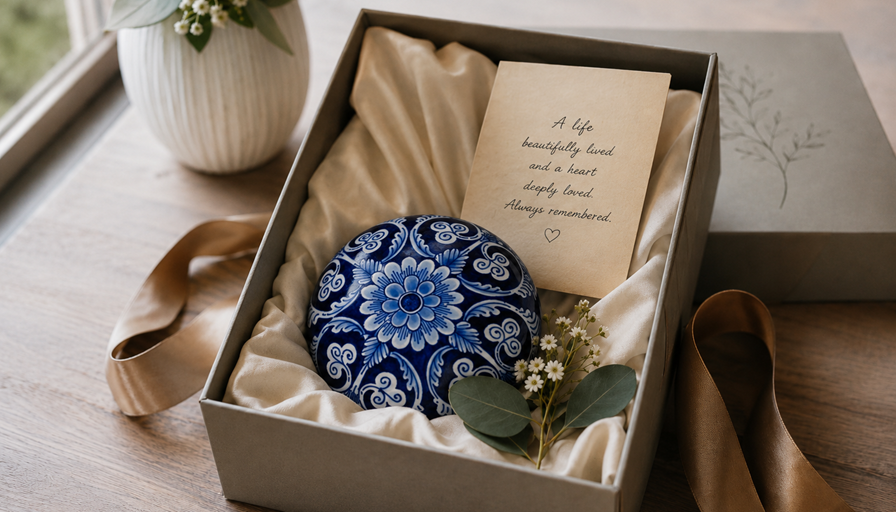
Words can become part of a lasting tribute. Some families choose a short phrase for an urn inscription, memorial plaque, keepsake, photo frame or piece of memorial jewelry. In those cases, shorter wording usually works best.
If you are considering a lasting remembrance after cremation, our cremation urn advice and memorial options page offers practical guidance about urn size, keeping ashes at home, filling an urn, cremation jewelry, keepsake urns and other memorial choices.
Cremation urn advice
Calm guidance on urn size, ashes, keepsakes, cremation jewelry and memorial choices.
Personalized memorial wording
Learn more about engraving, customization and personal messages on urns or memorial items.
Cremation jewelry
A personal option for a short inscription or a discreet symbolic remembrance.
Keepsake urns
Small urns that may hold a portion of ashes and sometimes allow personal wording.
Related wording guides
If you are looking for more ways to express sympathy or remembrance, these related guides may help.
Condolence text messages
Short and respectful messages for cards, texts and private support.
Memorial advice after cremation
Practical guidance for families considering urns, keepsakes and cremation jewelry.
Frequently asked questions about alternatives to rest in peace
What can I say instead of rest in peace?
You can say “In loving memory”, “Forever in our hearts”, “May you be at peace”, “Gone but never forgotten” or “Your memory will live on”. The best choice depends on the tone, relationship and setting.
Is it okay to write RIP?
Yes, RIP is widely understood and still appropriate in many situations. However, some people prefer a more personal phrase for sympathy cards, obituaries, memorial posts or engravings.
What is a short phrase for an urn engraving?
Short phrases such as “In loving memory”, “Forever in our hearts”, “Always loved” or “Until we meet again” are often suitable for urn engravings, plaques and keepsakes.
What is a non-religious alternative to rest in peace?
Non-religious alternatives include “Forever in our hearts”, “Gone but never forgotten”, “You will be deeply missed”, “Your memory will live on” and “May you be at peace”.
What is a religious alternative to rest in peace?
Religious or spiritual alternatives include “In God’s care”, “Sleep in heavenly peace”, “Rest with the angels”, “May your soul rest in peace” and “Rest in eternal light”.
What should I write in a memorial post?
Keep it sincere and respectful. You might write: “In loving memory of [name]. You will be deeply missed and forever remembered.” Avoid sharing private details unless the family has already made them public.
Can I use “rest in power” instead of “rest in peace”?
Yes, but use it thoughtfully. “Rest in power” is often used for someone whose life, voice or work had a strong social, cultural or community impact. It may not suit every memorial message.
Final thoughts
“Rest in peace” remains a timeless phrase, but it is not the only way to express love, remembrance and respect. Whether you choose something simple, spiritual, poetic or deeply personal, the most important thing is that your words feel sincere.
If you are choosing wording for a memorial item, urn, keepsake or piece of cremation jewelry and would like guidance, please contact us. We will be happy to help with care and respect.