
How to Fill and Seal a Cremation Urn for Ashes
How do you fill a cremation urn for ashes?
Filling a cremation urn is a personal and sometimes emotional moment. For some families, it feels like a final caring act. Others prefer to ask the crematorium, funeral director or another experienced person to do it for them. Both choices are completely understandable.
This page explains what to consider before filling, closing and, if needed, sealing an urn for ashes. The practical steps can differ depending on the urn model, the crematorium, the way the ashes are supplied and whether the urn will be kept indoors, placed outdoors, buried or placed in a columbarium.
Before you begin, always check whether the urn is suitable for the amount of ashes, whether the filling opening is large enough and whether you may want to open the urn again later.
Who can fill the urn?
1. The crematorium
Many crematoria can fill the urn for you or help with the process. Ask in advance whether this is possible, whether costs apply and whether they can work with the urn you have chosen.
2. The funeral director
A funeral director or funeral arranger can often provide practical support. This may feel reassuring if you do not want to fill the urn yourself.
3. Yourself or with family
You may also fill the urn yourself, possibly together with a family member. Take your time, prepare the space carefully and read the instructions before you begin.
Important: always check the urn before filling it. Look for damage, cracks, loose parts or an unusual closure. Only fill or seal the urn when you are sure the correct model has been delivered and the capacity, opening and dimensions are suitable.
Preparation before filling the urn
Choose a calm and stable place
Use a flat table, allow enough space and choose a moment when you will not be disturbed. Place a large sheet of paper, clean cloth or tray underneath the urn so that any spilled ash can be collected respectfully.
Prepare the right tools
Useful items include a funnel, small scoop, flat brush, kitchen paper, gloves and, if needed, transparent sealant or suitable adhesive. Work slowly and avoid draughts.
Check the ash container, ash bag and opening
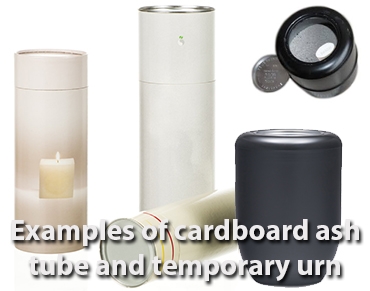
Depending on the crematorium, ashes may be supplied in a temporary container, ash container, ash bag or cardboard tube. Check whether the container can be placed inside the urn or whether the ashes need to be transferred. Not every filling opening is large enough for a complete ash container.
Consider the identification marker
A small identification disc, cremation stone or similar marker may be present with the ashes. Not every urn opening is large enough to include it. You may choose a separate destination, such as an accessory or small storage box. View our accessories for urns and keepsakes.
Different types of urn closures
Not every urn closes in the same way. Some urns have a lid that can be glued or sealed. Other models have a screw lid, click lid, cover plate or bottom closure. Always check the closure of the specific urn before you begin.
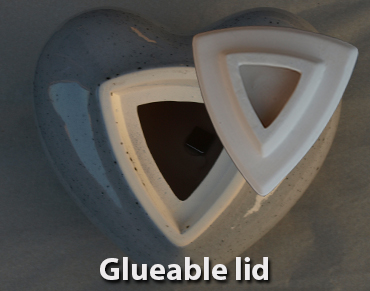
Ceramic urns and some natural stone or design urns often have a lid that can be glued or sealed.
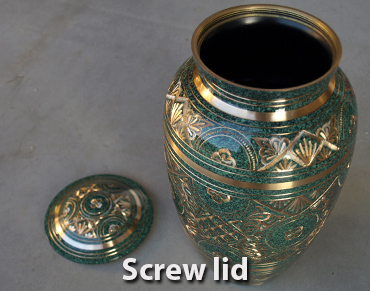
Brass urns, metal urns and some travel urns often have a screw lid or screw cap.
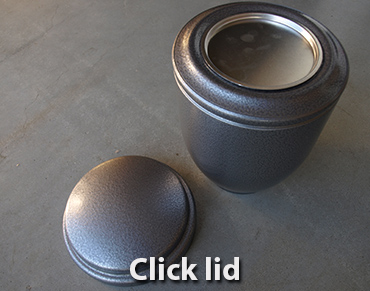
Some metal urns close with a click lid or cover plate. Check whether additional sealing is needed.
Filling an urn, step by step
Practical method
Place the urn securely on a flat surface. Work over a large sheet of paper or a clean cloth. If any ashes fall beside the opening, you can collect them carefully with a flat brush and place them back into the urn.
Use a funnel if the filling opening is small. Fill slowly and without rushing. Do not tap hard on the urn, especially with ceramic, glass, porcelain or natural stone urns. After filling, check that the closure is clean and dry before screwing, clicking, gluing or sealing it.
Should an urn be glued or sealed?
Whether an urn should be glued or sealed depends on the model, closure and where the urn will be placed. For indoor placement, transparent silicone sealant is often sufficient if you may want to open the urn again later. A lid sealed with silicone can often be carefully cut loose with a sharp knife.
For outdoor placement, a stronger weather-resistant seal may be sensible because moisture, frost and temperature changes can affect the urn and closure. Always check whether the adhesive or sealant is suitable for the material of the urn.
Our advice: if you may want to open the urn later, avoid permanent glue unless it is truly necessary. If the urn will be placed outdoors, choose a durable sealant that suits the material and expected weather conditions.
Filling and closing a biodegradable urn
Biodegradable urns are often chosen for burial, water ceremonies or natural remembrance. These urns may also need to be closed or sealed. Use an adhesive that suits both the material and the purpose of the urn.
Depending on the material, suitable options may include:
- dry adhesive or powder-based adhesive
- natural wood glue or bone glue where appropriate
- water-based dispersion adhesive
- adhesive based on dextrin or gum arabic
- water-based wood glue, if suitable for the material and intended use
With biodegradable urns, avoid unnecessarily strong or chemical adhesives if they do not suit the purpose of the urn. If in doubt, ask us, the crematorium or your funeral director for advice.
Filling ashes jewellery, a keepsake urn or a mini urn
Filling ashes jewellery, a keepsake urn or a mini urn requires extra care because the filling opening is often much smaller. Use a small funnel, a filling kit or a carefully folded piece of paper. Never fill above an open sink or directly over the floor. Always work above a clean sheet of paper or small tray.
Ashes jewellery usually holds only a very small symbolic amount of ash. The remaining ashes can be kept in a main urn, keepsake urn, temporary container or another chosen place. Always check whether the piece should be screwed closed, glued or closed with a special mechanism.
Further reading
This page is intended as practical guidance for filling, closing and sealing an urn. These advice pages may also help when choosing the right urn or memorial option:
Frequently asked questions about filling an urn
Can I fill a cremation urn myself?
Yes, in many cases you can fill a cremation urn yourself, possibly with a family member. First check the filling opening, closure and instructions for the specific model.
Can the crematorium fill the urn?
Often this is possible, but it differs per crematorium. Ask in advance whether they can fill the urn, whether costs apply and whether they work with an ash container, ash bag or temporary container.
Do I always need to glue the urn?
No, this depends on the closure and placement. An urn with a screw lid may not need to be glued. If the urn will be placed outdoors or has a loose lid, sealing or gluing may be sensible.
Which sealant can I use for an urn?
For indoor placement, transparent silicone sealant is often used, especially if the urn may need to be opened later. For outdoor placement, a stronger weather-resistant sealant may be more suitable. Always check whether it suits the urn material.
What should I do with the identification marker?
If an identification disc, cremation stone or similar marker is present, it may sometimes be placed in the urn. If it does not fit through the opening, you may choose a separate destination, such as a small storage box or accessory.
Can I fill ashes jewellery myself?
Many ashes jewellery pieces can be filled at home with a tiny amount of ash. Use a small funnel or filling kit and close the jewellery carefully according to the product instructions.
Questions about filling or closing an urn?
We cannot be held responsible for damage caused by filling, sealing or closing an urn, keepsake urn or ashes jewellery yourself. If you are unsure about the right method, please contact us, your funeral director or the crematorium before you begin.
