
Ashes After Cremation: Where Can an Urn Be Placed?
Ashes after cremation, what are the options?
After a cremation, you do not always have to make a final decision immediately. Many families first keep the ashes in a temporary container or simple urn at home, so they can think calmly about the most fitting destination. The choice may be guided by the wishes of the person who has died, a place with personal meaning, or the need to keep the memory close.
There are several possible ways to give ashes a meaningful place. You may choose an urn at home, an urn in the garden, an urn grave, a memorial stone or urn monument, a columbarium niche, scattering ashes, a keepsake urn or ashes jewellery. On this page, you will find the most common options together, with links to more detailed guidance where helpful.
Before choosing an urn, always consider where it will be placed. A home memorial, cemetery, urn garden, columbarium or outdoor setting can all have different requirements for size, material, shape and durability.
Options for ashes after cremation
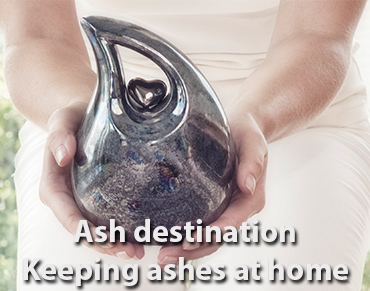
Keeping an urn at home
An urn at home gives the ashes a visible and personal place. Many families combine the urn with a photograph, candle, flowers or another meaningful object.
Read more about keeping ashes at home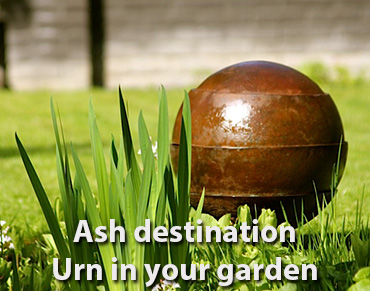
Urn in the garden
A garden urn can create a quiet memorial place outdoors. Pay attention to material, shelter, frost resistance, moisture and how exposed the urn will be.
View options for the garden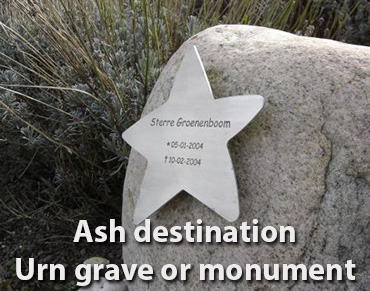
Urn grave, memorial stone or urn monument
An urn grave, memorial stone or urn monument gives the ashes a fixed place at a cemetery, crematorium, urn garden or another dedicated memorial location.
Read more about urn graves and memorials
Columbarium or urn wall
A columbarium is an urn wall or gallery with niches in which an urn can be placed. The available space differs per cemetery or crematorium.
Read more about columbarium niches
Scattering ashes
Scattering ashes can be meaningful when a landscape, place or moment is strongly connected with the person who has died. Always check local rules and permissions.
Read more about scattering ashes
Ashes jewellery
An ash pendant, ring, bracelet or other piece of ashes jewellery can hold a small symbolic amount of ash in a discreet and personal way.
View ashes jewelleryWhat should you consider before choosing an ash destination?
The right choice depends on your personal situation, the wishes of the person who has died and the place where remembrance feels most meaningful. Some families choose one central urn. Others divide a small part of the ashes into keepsake urns, ashes jewellery or other memorial objects.
- For home: choose an urn that fits your interior and the place where it will stand.
- For outdoor placement: check material, frost resistance, moisture resistance and shelter.
- For a columbarium: ask the cemetery or crematorium for the exact niche dimensions before choosing an urn.
- For scattering ashes: choose a scattering urn or tube that suits the location and moment.
- For ashes jewellery: remember that jewellery holds only a small symbolic amount of ash.
- For several relatives: consider dividing a portion of the ashes into keepsake urns, mini urns or ashes jewellery.
Would you first like to compare materials, shapes and styles? View our collection of urns for ashes, keepsake urns and ashes jewellery to get a clearer idea of what is possible.
Which urn should I choose?
The right urn depends mainly on what you want to do with the ashes. An urn for the home may be chosen for its appearance and personal meaning. A garden urn or cemetery urn should be chosen with durability and placement in mind. A columbarium urn must fit the available niche. A scattering urn should be easy to handle during the ceremony.
For a full-size adult urn, capacity is important. For keepsake urns and ashes jewellery, only a smaller symbolic portion of the ashes is used. If you are unsure, first check the amount of ashes and the intended place before choosing the final design.
Frequently asked questions about ashes after cremation
Do I have to decide immediately what to do with the ashes?
No. Many families take time to think before making a final decision. A temporary container or simple urn can be used until you know whether the ashes will be kept, buried, placed, scattered or divided.
Can ashes be divided?
Yes, ashes can often be divided into several keepsake urns, mini urns, ashes jewellery or memorial objects. This can be helpful when several family members each want a personal remembrance.
Does every urn fit in a columbarium?
No. Columbarium niche sizes differ per cemetery or crematorium. Always check the available space before choosing an urn for a columbarium or urn wall.
Can an urn be placed outdoors?
Not every urn is suitable for outdoor placement. If the urn will be placed in a garden or outside memorial setting, choose a material that can cope with moisture, frost and changing temperatures.
Can ashes be scattered anywhere?
No. Rules and permissions can differ by country, local authority, cemetery, crematorium, landowner or water authority. For scattering at sea, on private land or in a public place, always check the relevant authority or landowner first.
Can I combine several ash destinations?
Yes. Many families choose a combination, for example a main urn at home, a small keepsake urn for another relative and ashes jewellery for someone who wants to keep a symbolic amount close.
Personal advice about choosing an ash destination
Choosing what to do with ashes after cremation is personal. There is no single right answer. The best choice is the one that fits the wishes of the person who has died, your family situation and the place where remembrance feels most natural.
If you are unsure, first decide whether the ashes will be kept together, divided, buried, placed in a columbarium, scattered or worn in ashes jewellery. From there, it becomes easier to choose the right urn, keepsake or memorial piece.
