Burying Ashes After Cremation in the UK: What Families Should Consider
For many families, the question of where ashes should rest does not come immediately after the cremation. It often comes later, when the first practical arrangements have passed and the need for a lasting place of remembrance becomes more personal. Burying ashes can offer that place, but in the UK it is important to understand the choices, permissions and long-term consequences before deciding.
Yes, cremation ashes can often be buried after cremation in the UK. The right choice depends on where the ashes will be placed, who owns or manages the land, and what kind of memorial your family wants to create. Ashes, often referred to as cremated remains, may be interred in a cemetery, cremation plot, family grave, memorial garden, natural burial ground or, in some circumstances, on private land with the correct permission.
For many people, burying ashes feels reassuring because it creates a dedicated place to visit. It can give remembrance a sense of permanence and may fit religious, cultural or personal wishes. Others choose burial because they want the ashes to return to the earth, especially when using a biodegradable urn or a natural memorial setting.
Before making arrangements, it helps to answer a few practical questions first:
- Where would you like the ashes to rest?
- Who owns, manages or controls that place?
- Do you want a permanent memorial that relatives can visit?
- Would you like the option to move the ashes later, if circumstances change?
- Should the memorial be private, shared, marked or deliberately discreet?
These questions often matter more than the burial itself. The act of placing ashes in the ground is usually simple. The long-term meaning, access and suitability of the place deserve more careful thought.
What Does Burying Ashes Mean?
Burying ashes means placing cremated remains into the ground. This may be done directly, inside a simple container, or within an urn chosen specifically for burial. In the UK, this is often described as the interment of ashes or the interment of cremated remains.
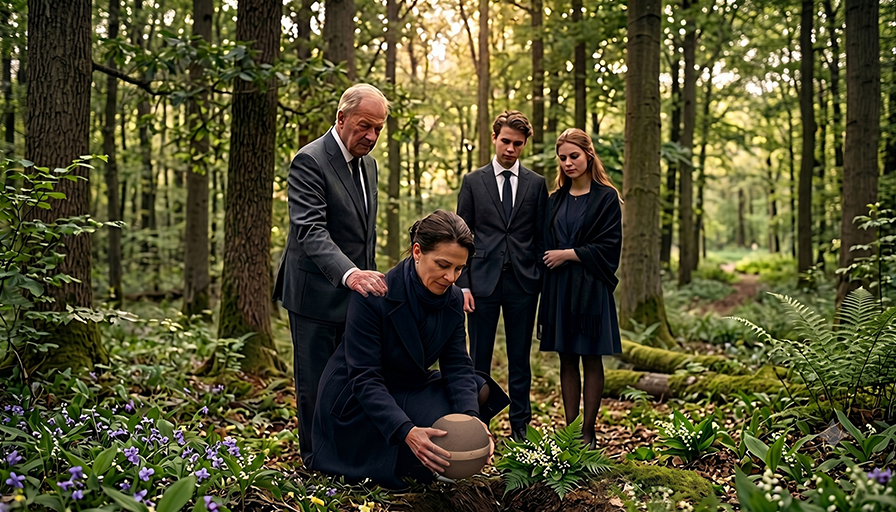
The process is usually less complex than a full coffin burial, but it still needs to be arranged properly. The family normally chooses a location, checks the rules of that location, selects an urn or container if needed, and decides whether the burial will include a small ceremony, a plaque, a memorial stone, planting or another form of remembrance.
Some families decide soon after the cremation. Others keep the ashes at home for months or years before making a final decision. In most situations, there is no need to rush. Taking time can prevent regret, especially when several relatives are involved or when the family is unsure whether they want a cemetery, garden, natural burial ground or home memorial.
Where Can Ashes Be Buried in the UK?
There is no single answer that applies to every family. The best location depends on access, permission, family expectations and the type of memorial you want to maintain in the years ahead.
| Burial location | Why families choose it | What to check first |
|---|---|---|
| Cemetery or cremation plot | A maintained, recorded and visitable place of remembrance. | Cemetery rules, plot availability, urn requirements, memorial options and who holds the right to authorise the interment. |
| Existing family grave | Keeps cremated remains close to relatives already buried there. | Whether the grave can be reopened, who owns the burial rights and whether further interments are allowed. |
| Private land or garden | A personal location connected to home, family life or shared memories. | Land ownership, restrictions, environmental considerations and whether relatives will still have access if the property is sold. |
| Natural burial ground | A simpler, nature-focused setting where biodegradable urns may be appropriate. | Site rules on urn materials, planting, markers, ceremonies and whether scattering or burial of ashes is allowed. |
| Memorial garden | A peaceful managed setting, often designed specifically for remembrance. | Rules on plaques, planting, urn type, access, maintenance and long-term memorial rights. |
Burying Ashes in a Cemetery or Cremation Plot
Cemeteries remain one of the most common choices for burying ashes in the UK. Many cemeteries offer dedicated cremation plots, small graves for cremated remains, memorial gardens or the option to inter ashes in an existing family grave where space and permission allow.
This option can work well if you want:
- A maintained and formally recorded place of remembrance
- A location that relatives can visit over time
- The possibility of adding a plaque, inscription or memorial stone
- A clear administrative record of where the ashes have been placed
- A setting that feels familiar, traditional or connected to other family members
It is important to check the rules of the cemetery before choosing an urn or memorial. Some cemeteries allow decorative memorial items, while others have strict rules about urn materials, grave markers, plaques, planting and maintenance. In many cemeteries, the person arranging the burial will also need to confirm who holds the right to use the grave or cremation plot.
Interring Ashes in an Existing Family Grave
Many families ask whether ashes can be buried in a grave where another relative is already buried. This is often possible, but it depends on cemetery rules, available space, grave records and who has the legal right to authorise a further interment.
In practice, this usually means contacting the cemetery office or burial authority. They can confirm whether the grave can be reopened, whether cremated remains may be added, and who must give permission. This is especially important when several family members have an emotional connection to the same grave.
Adding ashes to a family grave can be a meaningful choice. It keeps relatives together and gives the family one shared place to visit. However, it should not be assumed that it is automatically possible. The decision depends on the records and rules of that specific cemetery.
Burying Ashes on Private Land
Burying ashes on private land may be possible in some circumstances, especially if the land is owned by the family and the location is suitable. This might be a family garden, a rural property or another place that carries personal meaning.
Before choosing private land, consider the following carefully:
- Who legally owns the land?
- Is the property freehold, leasehold or subject to restrictions?
- Could the property be sold in the future?
- Would family members still be able to visit if ownership changes?
- Could the burial location cause concern for future buyers?
- Should the location be recorded privately so relatives know exactly where the ashes were buried?
- Is there any local, environmental or land-use issue that should be checked first?
The emotional appeal of a private garden can be strong, especially when the person loved that place. The practical concern is future access. If the property is sold, relatives may no longer have the right to visit the burial location. For this reason, some families prefer to keep part of the ashes in a keepsake urn, choose a managed memorial garden, or wait until they feel certain that private land is the right long-term choice.
Natural Burial Grounds and Memorial Gardens
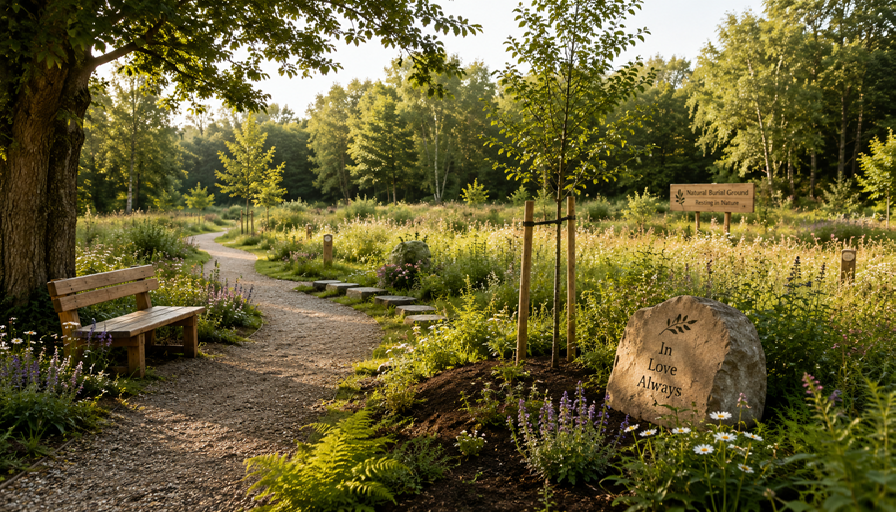
Natural burial grounds and memorial gardens are increasingly chosen by families who want a simpler, more nature-focused form of remembrance. Depending on the site, ashes may be buried beneath a tree, in a wildflower area, in a woodland setting or in a designated cremated remains plot.
These settings often feel less formal than a traditional cemetery, but they still have rules. Some natural burial grounds only allow biodegradable urns or natural materials. Others may restrict permanent headstones, artificial flowers, vases or decorative items.
Do not assume that every natural burial ground allows scattering, permanent markers or every type of biodegradable urn. Many sites have their own environmental and memorial rules, so it is always best to check before choosing the urn or planning the ceremony.
If your family is considering this type of setting, ask the site manager what is allowed before choosing the urn. A biodegradable urn may be more suitable for a natural burial ground than a ceramic, metal or stone-style urn, but the final choice should follow the site’s own requirements.

Should Ashes Be Buried Directly or Inside an Urn?
One of the most important choices is whether to bury the ashes directly into the earth or place them inside an urn first. Both options can be meaningful, but they have different practical consequences.
Direct Burial of Ashes
Direct burial means the ashes are placed into the ground without a long-lasting urn. This may suit families who want a very simple, natural or symbolic return to the earth. It can also be appropriate in settings where a permanent container is not wanted.
The main limitation is future flexibility. Once ashes are placed directly into the soil, recovering or moving them later is usually difficult. Cremated remains are also mineral in nature and can be concentrated in one place, so direct burial around plants or tree roots should be considered carefully. Some families prefer to use a biodegradable urn or follow the guidance of a natural burial ground when the intention is to create a planted memorial.
Burial in an Urn
Many families choose to bury ashes inside an urn because it gives the placement more structure. It can make the burial feel more formal, help define the exact location, and, depending on the material and setting, may offer some protection for the ashes.
Burial in an urn may be suitable if you want:
- A clearer and more dignified placement process
- A defined memorial location
- An urn that reflects the person’s taste or character
- Greater practical flexibility if relocation is ever considered
- A memorial that feels complete before being placed underground
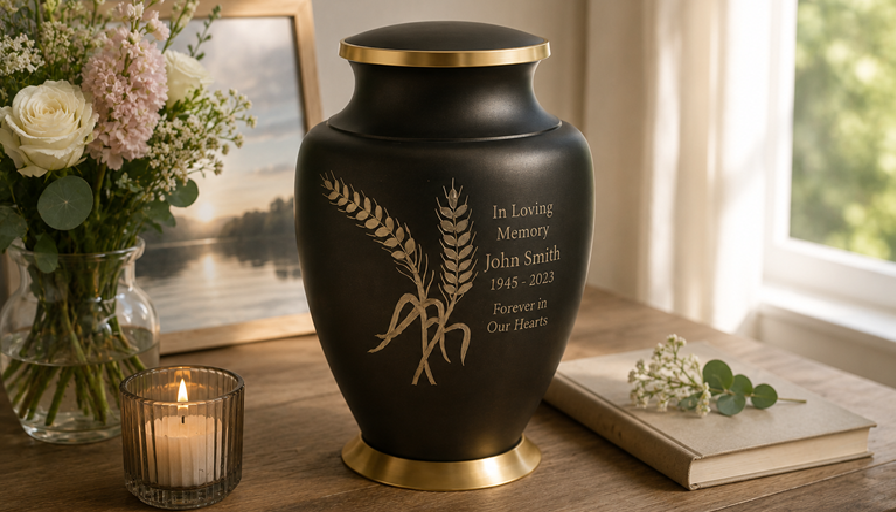
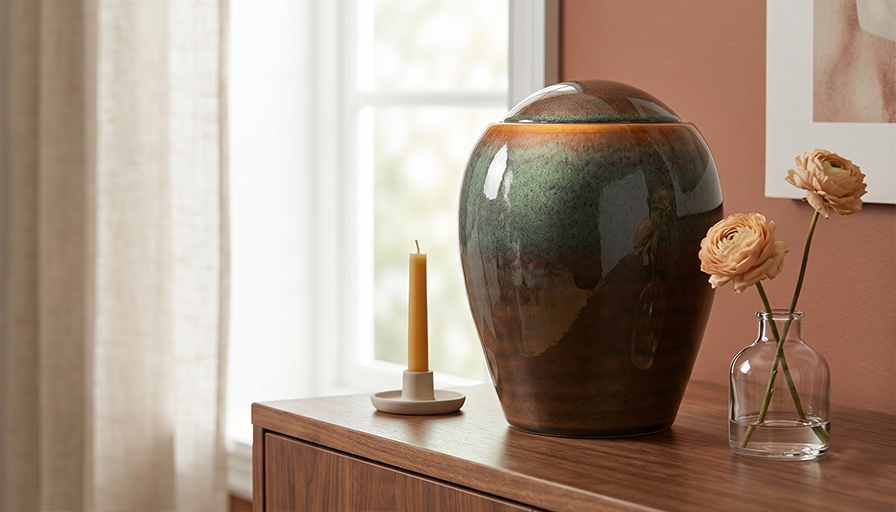
Urns for ashes are available in many materials, including biodegradable materials, wood, ceramic, natural stone, metal and other decorative finishes. The right choice depends on whether the urn will be buried in a cemetery, natural burial ground, private garden or another approved setting.
Do Cremation Ashes Decompose Underground?
Cremation ashes do not decompose in the same way as organic matter. They are mainly mineral remains from bone after the cremation process. Over time, what changes most is the surrounding soil and the material of the urn or container, if one is used.
A biodegradable urn is designed to gradually break down when buried in suitable conditions. The speed of this process depends on the material, soil, moisture and burial environment. An urn made from ceramic, stone, metal or another durable material may remain intact for much longer.
This is why the urn should be chosen according to the purpose of the burial, not only its appearance. A family choosing a natural burial ground may prefer a biodegradable urn. A family choosing a cemetery plot may prefer a more structured or decorative urn, provided the cemetery permits it.
Can Buried Ashes Be Moved Later?
This is one of the most important questions to consider before burial. Families sometimes assume that ashes can simply be moved if plans change, but this is not always straightforward.
Once cremated remains have been buried in a cemetery, memorial garden or formal burial plot, removing them later may require permission and official procedures. In England and Wales, removing buried human remains, including cremated remains, can require an exhumation licence. Scotland and Northern Ireland may have different procedures.
This does not mean ashes should never be buried. It simply means the decision should be made carefully. If your family is uncertain, keeping the ashes at home for a period of reflection, choosing a keepsake urn, or dividing a small portion of ashes among close relatives may help preserve future options.
Questions to Ask Before Choosing a Burial Location
A burial place can feel right in the moment, but it should also make sense years from now. The following questions can help families avoid decisions that later feel difficult to maintain.
Will People Realistically Visit?
A beautiful place is not always a practical place. If the burial location is far away, difficult to reach or connected to a property that may not stay in the family, visits may become less frequent over time. Some families find comfort in a cemetery because access is clear. Others prefer a private garden because it feels close and personal.
Who Needs to Be Involved in the Decision?
Ashes often carry meaning for more than one person. A partner, children, parents, siblings or close friends may all have different views. Discussing expectations before burial can prevent tension later, especially if the ashes will be placed in a location that cannot easily be changed.
Do You Want a Marked or Unmarked Place?
Some families want a visible marker, plaque or stone. Others prefer a discreet burial without a formal memorial. Cemeteries and natural burial grounds may have specific rules about what can be added, so this should be checked before choosing the final location.
Would a Shared Memorial Feel Better?
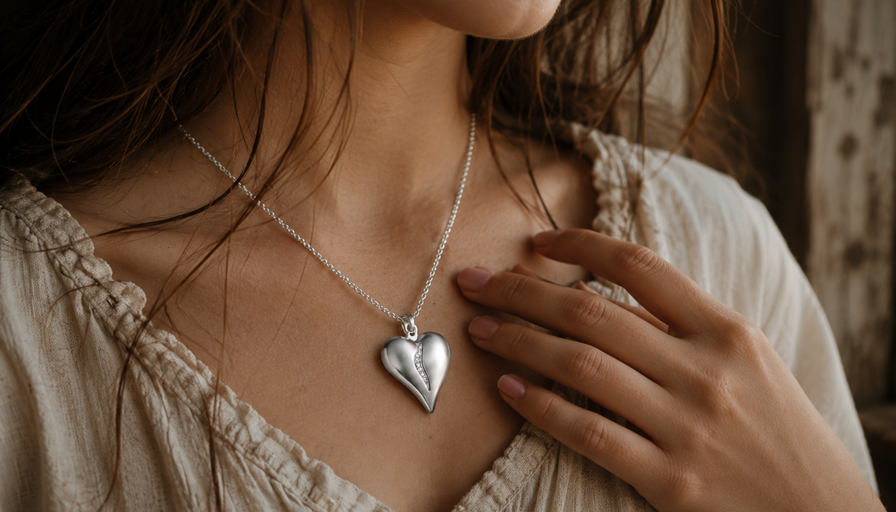
If relatives live in different parts of the country, one burial location may not meet everyone’s emotional needs. In these situations, families sometimes combine burial with keepsake urns, cremation jewellery or a small home memorial so that more than one person has a tangible connection.
Common Mistakes Families Regret Later
Most regrets are not about the act of burying ashes. They are usually about decisions made too quickly, without checking permissions, access or family expectations.
Common mistakes include:
- Choosing a private location without thinking about future property ownership
- Assuming an existing family grave can automatically be reopened
- Selecting an urn before checking cemetery or natural burial ground rules
- Believing ashes must be buried immediately after cremation
- Not discussing the decision with close family members
- Forgetting that moving buried ashes later may be complicated
- Choosing a remote place that becomes difficult to visit
- Choosing a decorative urn that is not accepted by the burial site
A helpful approach is to separate the emotional decision from the practical one. First ask where the ashes should rest. Then ask whether that place will still work practically, legally and emotionally in the future.
Can Burial Be Combined with Other Memorial Options?
Yes. Burying ashes does not prevent other forms of remembrance. Many families choose one main resting place and then create smaller personal memorials for close relatives.
Burial can be combined with:
- A private or formal memorial ceremony
- A planted tree, shrub or flower area where permitted
- A plaque, inscription or memorial stone
- A framed photograph or remembrance book at home
- A keepsake urn for a small portion of ashes
- Cremation jewellery for a partner, child or close family member
- A small home memorial alongside the burial place
This can be especially helpful when one person wants a fixed place to visit while another prefers to keep a small, personal reminder close by. A memorial does not have to exist in only one form.

Which Type of Urn Is Best for Burying Ashes?
The best urn for burying ashes depends on the location, the family’s wishes and the rules of the cemetery or burial ground. The most suitable urn is not always the most decorative one. It is the urn that fits the setting, the material requirements and the long-term intention of the memorial.
Biodegradable Urns
Biodegradable urns are often chosen for natural burial grounds, garden burials and environmentally conscious memorials. They are designed to break down gradually in the earth and are usually made from natural or water-soluble materials.
This option may be suitable if the family wants the ashes to become part of a natural setting over time. Always check whether the burial ground accepts the specific urn material before purchase.
Ceramic, Stone and Metal Urns
More durable urns may be chosen when the family wants a structured container that remains intact for longer. These urns can feel more substantial and may suit cemetery burial, family graves or formal memorial plots.
However, not every cemetery or memorial garden accepts every material underground. Some sites require approved containers. Others may have rules about size, shape or long-term maintenance.
Simple Containers
Some families use a simple container for burial when the focus is on the place rather than the urn itself. This can be appropriate when a plaque, planting or ceremony carries the main meaning.
Once the burial location is clear, the choice of urn becomes easier. A biodegradable urn may suit a natural burial ground, while a more durable memorial urn may be more appropriate for a cemetery or family grave. Families who are not ready for a final decision may prefer to keep the ashes at home temporarily or divide a small portion into a keepsake urn or piece of cremation jewellery.
FAQ: Burying Ashes After Cremation in the UK
Can you bury ashes after cremation in the UK?
Yes, ashes can often be buried after cremation in the UK. Common options include a cemetery, cremation plot, family grave, memorial garden, natural burial ground or private land where permission and site rules allow.
What is the interment of ashes?
The interment of ashes means placing cremated remains into the ground, usually in a cemetery, cremation plot, family grave, memorial garden or another approved burial location.
Can ashes be buried in an existing family grave?
Often yes, but this depends on cemetery rules, available space and who has the right to authorise another interment. The cemetery or burial authority should always be contacted first.
Can I bury ashes in my garden?
It may be possible to bury ashes on private land, but you should check land ownership, any restrictions and future access. If the property is later sold, relatives may not have the right to visit the burial location.
Do I need permission to bury ashes?
Permission is usually needed if the ashes will be buried in a cemetery, cremation plot, family grave, memorial garden, natural burial ground or land owned by someone else. On private land, the landowner’s permission and any relevant local or environmental considerations should be checked.
How deep should ashes be buried?
There is no single depth that applies everywhere. Cemeteries and burial grounds usually provide their own requirements. On private land, it is sensible to check local and environmental considerations before making arrangements.
Do you need a special urn for burial?
Not always, but the urn should suit the burial setting. Natural burial grounds may require biodegradable materials, while cemeteries may have their own rules about approved containers.
Can ashes be buried years after cremation?
Yes. Many families keep ashes at home for months or years before deciding where they should be buried. There is usually no need to make this decision immediately.
Can buried ashes be moved later?
Moving buried ashes may require permission and, in England and Wales, an exhumation licence may be needed. This is why the burial location should be chosen carefully.
Can more than one person’s ashes be buried together?
Often yes, depending on the cemetery, grave space, family permissions and the chosen memorial arrangement. Some cremation plots or family graves allow more than one interment of cremated remains.
Is burying ashes environmentally friendly?
It depends on the location and materials used. A biodegradable urn in a natural burial ground may have a lower environmental impact than a durable urn in a formal memorial setting, but each site has its own rules and practical considerations.
Is burying ashes better than scattering them?
Neither option is automatically better. Burying ashes creates a more defined place of remembrance, while scattering can feel simpler or more symbolic. The best choice depends on family wishes, access, permission and whether you want a permanent location to visit.
Choosing a Memorial That Still Feels Right Years Later
Burying ashes is not only a practical arrangement. It shapes how remembrance will continue in daily life. Some families want a place they can visit. Others prefer a private setting, a natural landscape or a simple burial with very little visible marking.
The most thoughtful choice is usually the one that balances emotion with practical reality. Consider who will visit, who needs to give permission, whether the place will remain accessible, and whether the urn or container suits the burial environment.
If you are still unsure, it can help to keep the ashes at home temporarily in a memorial urn while your family reflects. You can then explore burial urns, biodegradable options, memorial stones, keepsake urns or cremation jewellery once the purpose of the memorial feels clear.
A meaningful memorial does not need to be complicated. It needs to feel considered, appropriate and capable of carrying the memory of the person in a way that still feels right years from now.
If you have questions about choosing a suitable urn for burial, a biodegradable urn, a keepsake urn or another memorial option, please feel free to contact us via the legendURN contact form.